
Building the Return Staircase
Today I am helping you understand the pices of the return staircase that we sell and how to put them all together to make either a right hand return or a left hand return.
here we go.....
I have labelled all the parts for you to help distinguish which piece I am actually holding in each photo. Please remember that I am doing this all one handed while holdong the camera with the other, so if you see any discrpancy in levels they are not meant to be there its just a matter of not being able to hold all the pieces exactly straight at the same time. I will explain with each photo.
Here are the contents of the box..
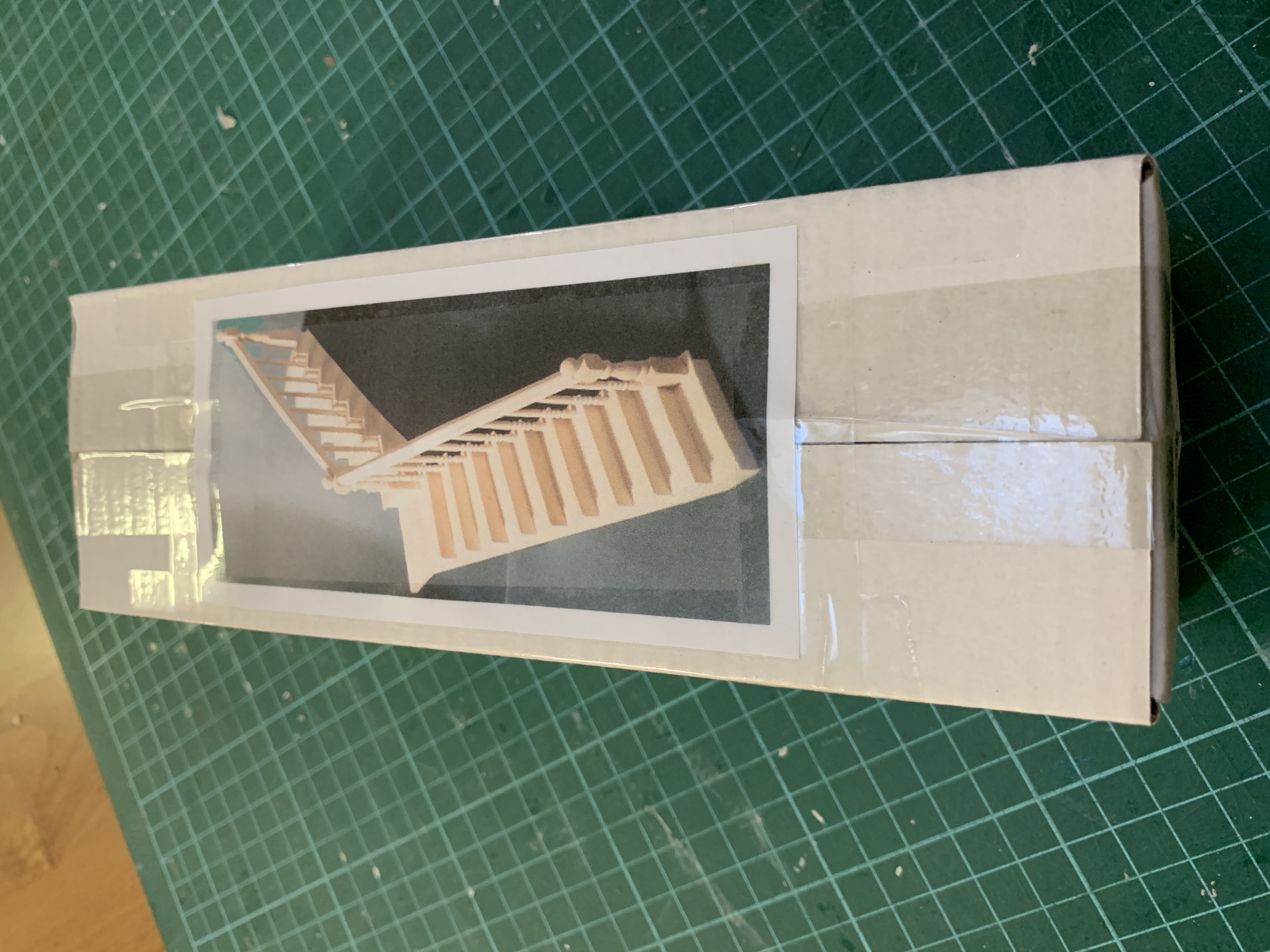

You will see I have labelled all the parts.
Let's begin..
Take the larger set of stairs and place it on your mat straight edge at the bottom as if it is standing on the floor. I then flipped mine on its side for you to see. I suggest you glue it this way too. Please do a dry run first using masking tape to check the fit in your dollhouse.


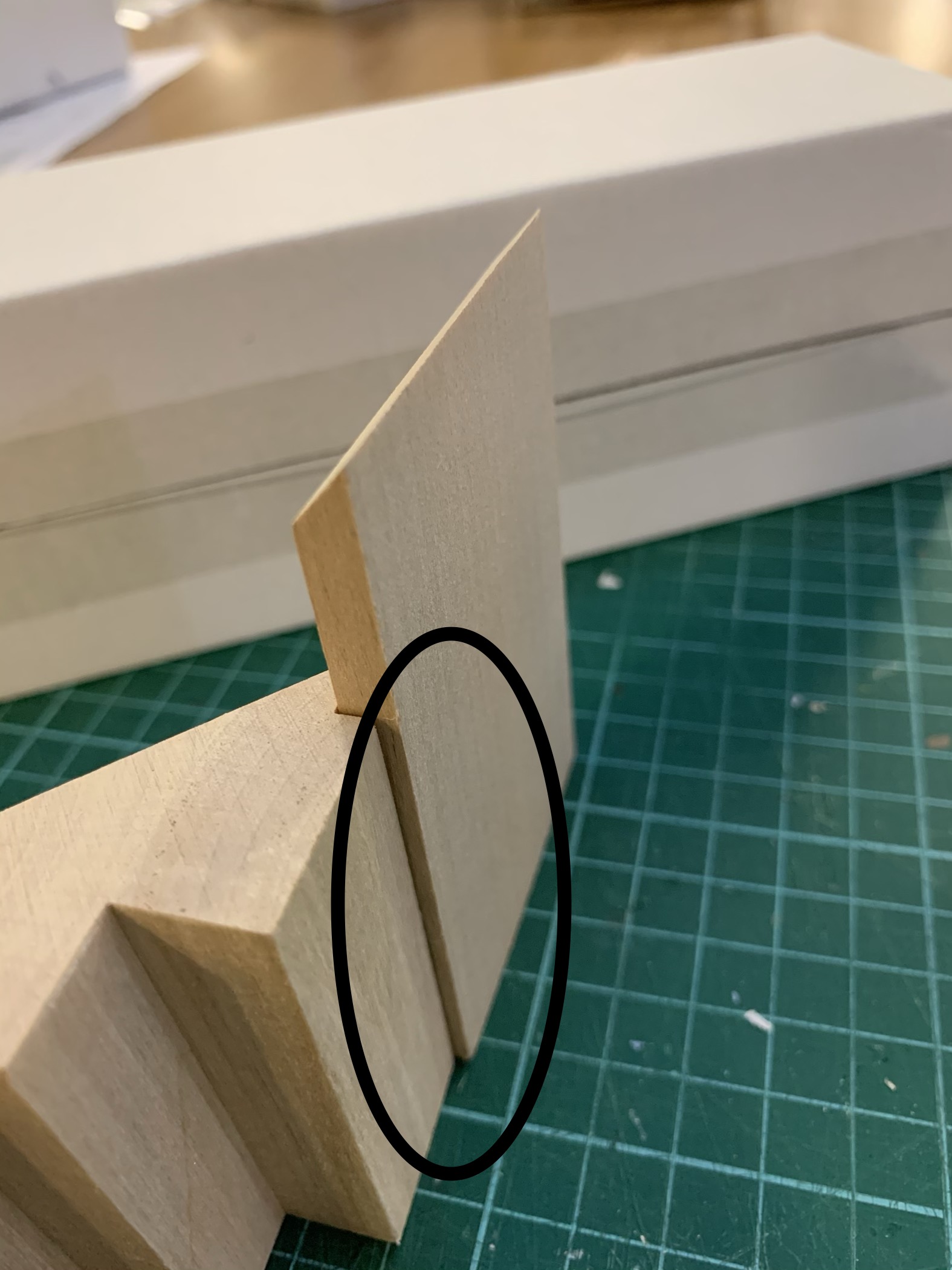
Then take the landing piece that I have labelled part C and place it on the top of stairs part A. Place the long side of C onto the lip of stairs A (further down it will become clearer which way the angle on the short edge must be facing) I turned the stairs around so you can see the difference in the height of landing C to the stairs A I have circled this for you to see clearer. This is where most customers start to doubt themselves..."it doesnt fit so I must be doing this wrong!" no you're not keep with me here...
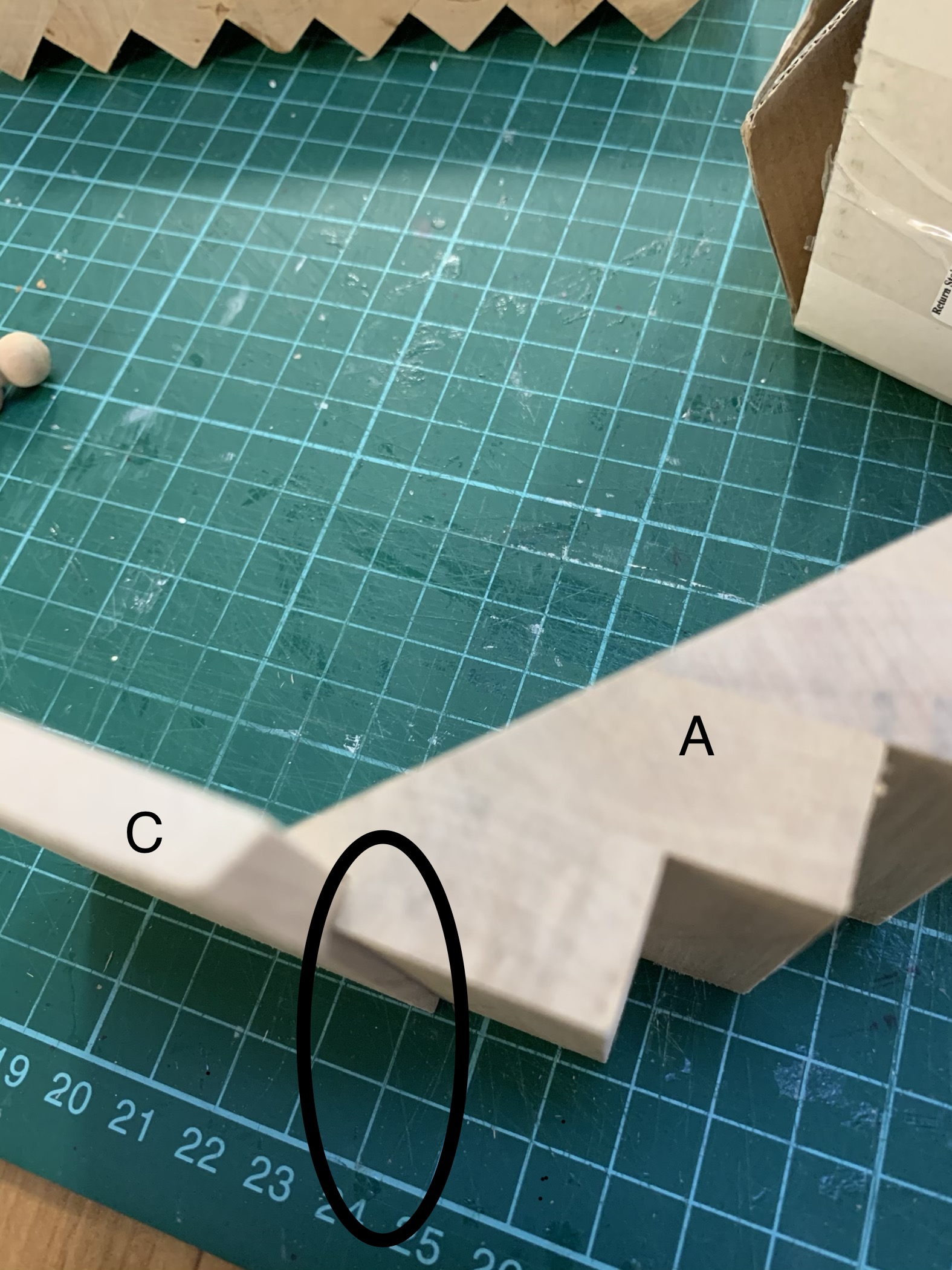

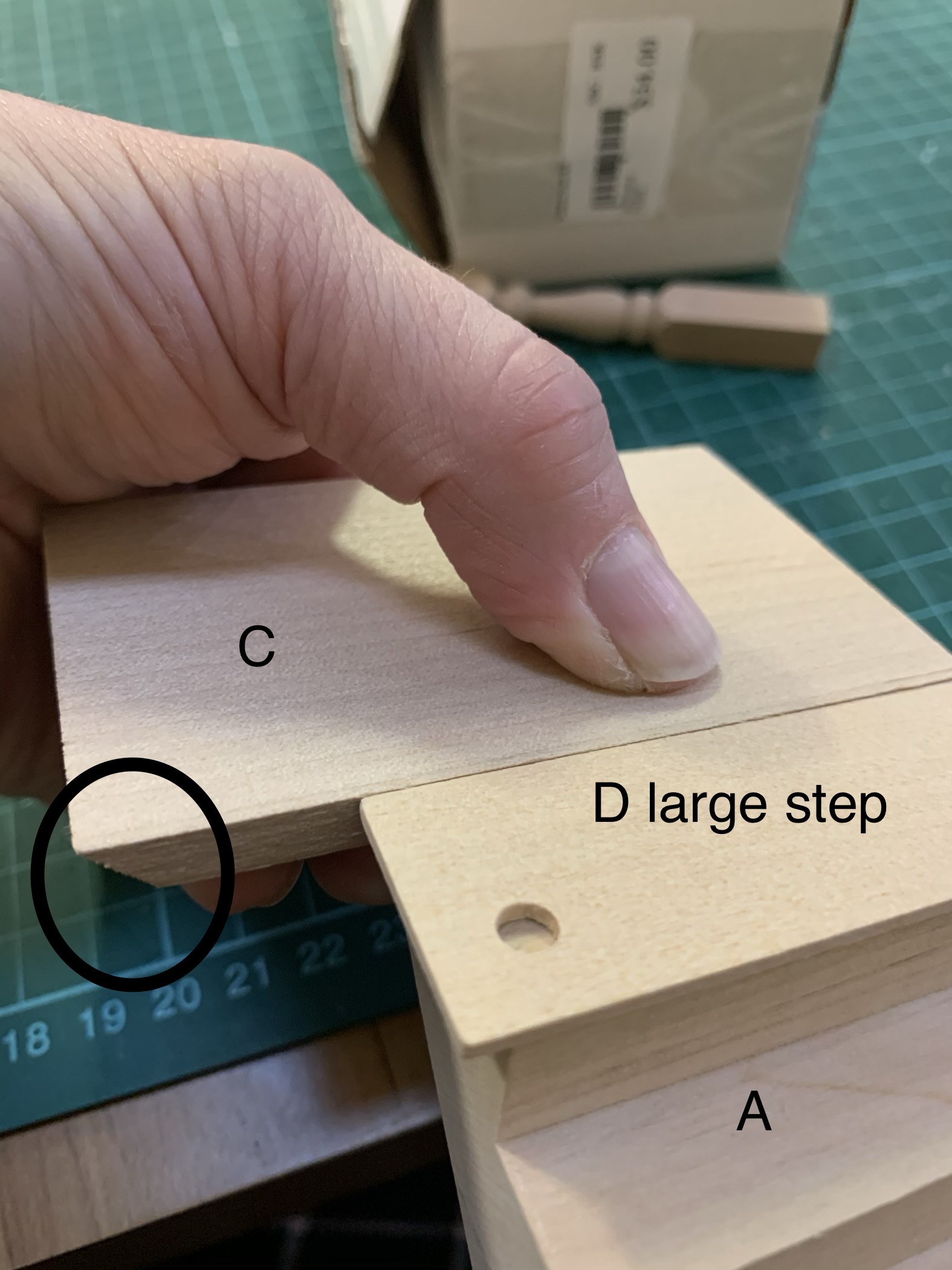
This gap is so that the steps added later work. Just for now place part D the large step (you can see in the above picture that there are two sizes, the large step is for the top step of the bottom stairs labelled A) onto the top step of the stairs A Now you can see why there is a gap and that when the steps are applied at the end this tread is flush and works. Do not add the steps until your stairs are glued. leaving your steps off means that you can stain these or paint these seperately so that you get a nice neat finish of your work at the end. Gluing them all together now will make painting so much harder at the end. If you are staining your stairs please do this before gluing your stairs together. Remember stain and glue do not like each other. If you get any glue seeping from your joins the stain will not adhere to it and will show up as white patches.


Now the next step is to put the smaller stair run part B onto the other side of the landing part C
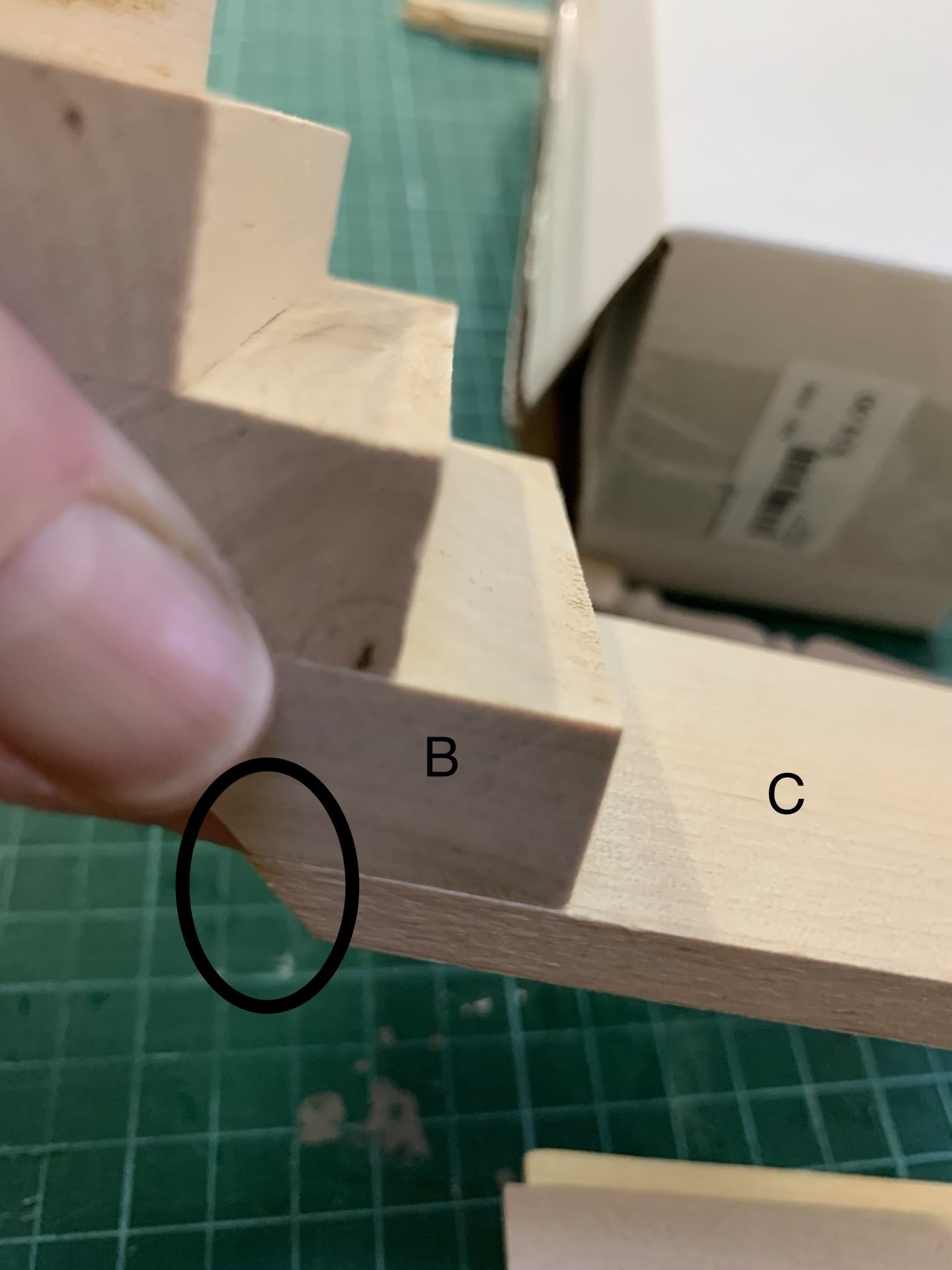
Here you see me place the shorter stair B onto the landing C. In this picture I am showing you the angle of the edge of the landing C and which way up the landing needs to be to accept the small stairs correctly. You will see that the landing is thinner than the stairs B so you must push your stairs to the edge of the landing that will sit to the wall of your hallway.

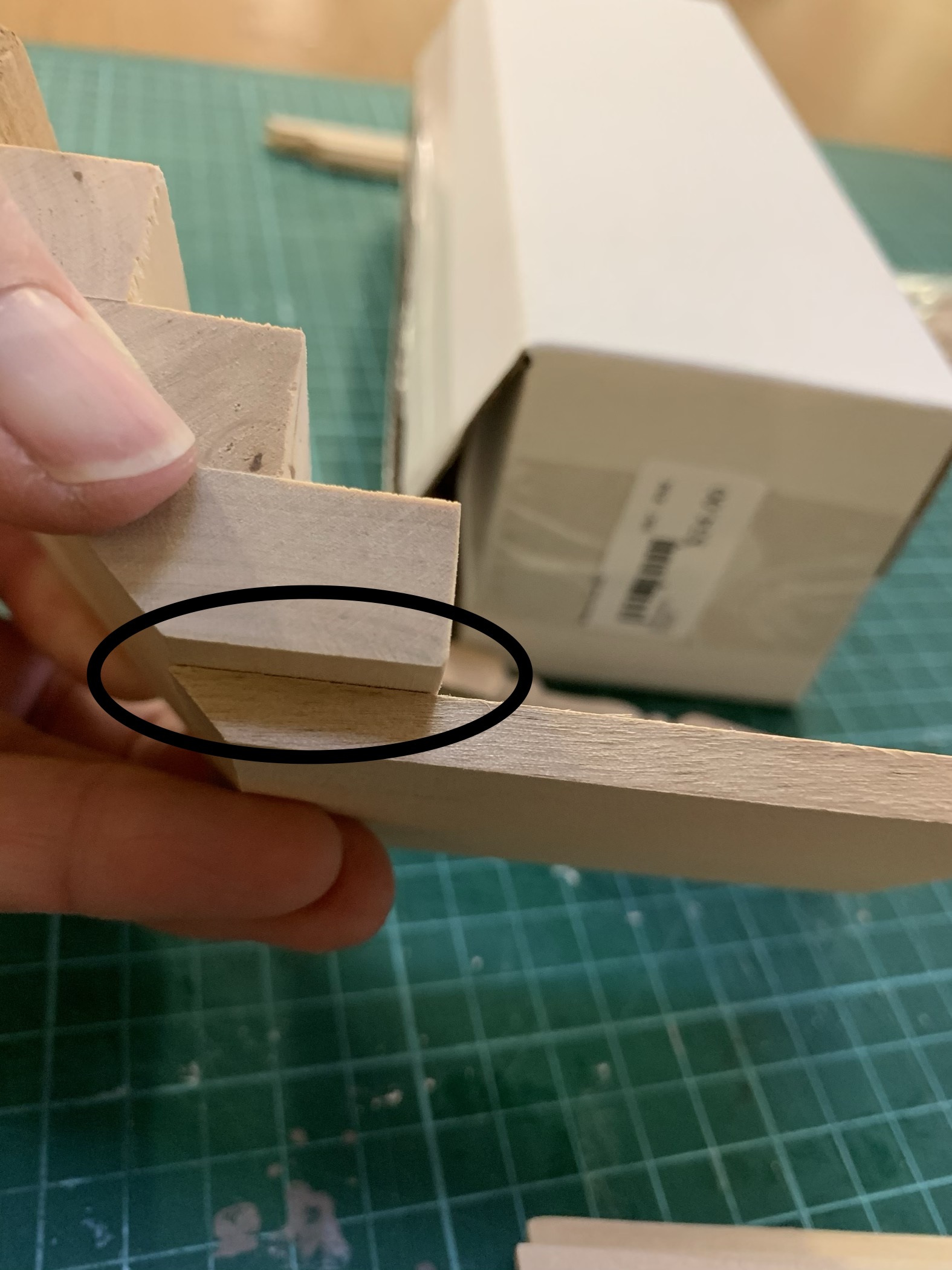
You can see on the picture above that I have slid the stairs back to where the landing and the stairs would be flush to the wall and their is a lip at the front. I am not sure why this is there but I think if you wanted to put in a wall under the stairs to support it and change up how the stairs look then this would be the perfect spot for the stairs to rest on the wall. If you dont want to do this lip is not really seen at all anyway.
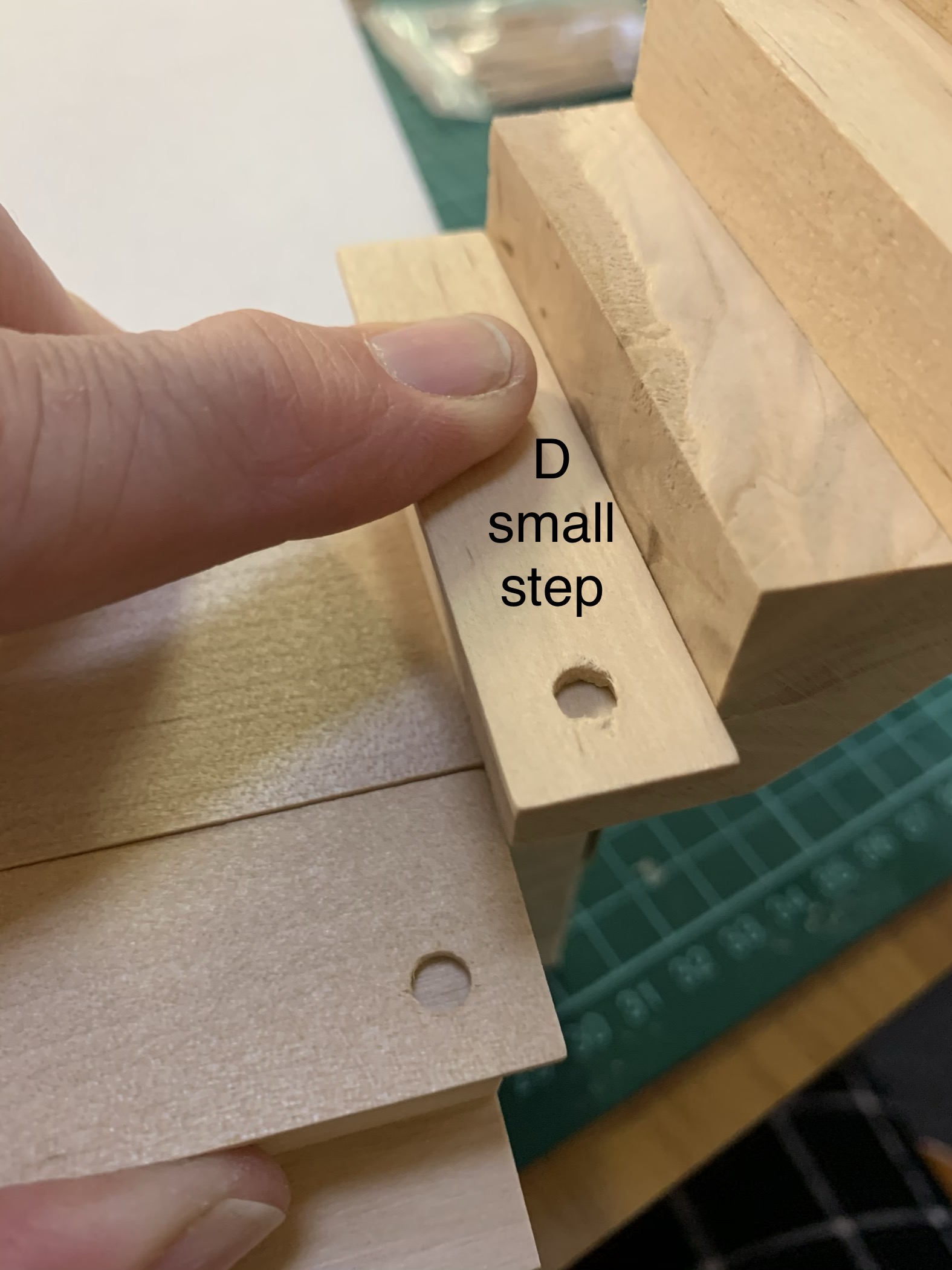
Once you have added the small stairs B to the landing C you can now see that the small step D will sit on all the other stairs. Please note that the holes go to the outside as these will take your spindles.
Then you can add your newel post E into the corner ready to take your handrail going both up the stairs and down the stairs.
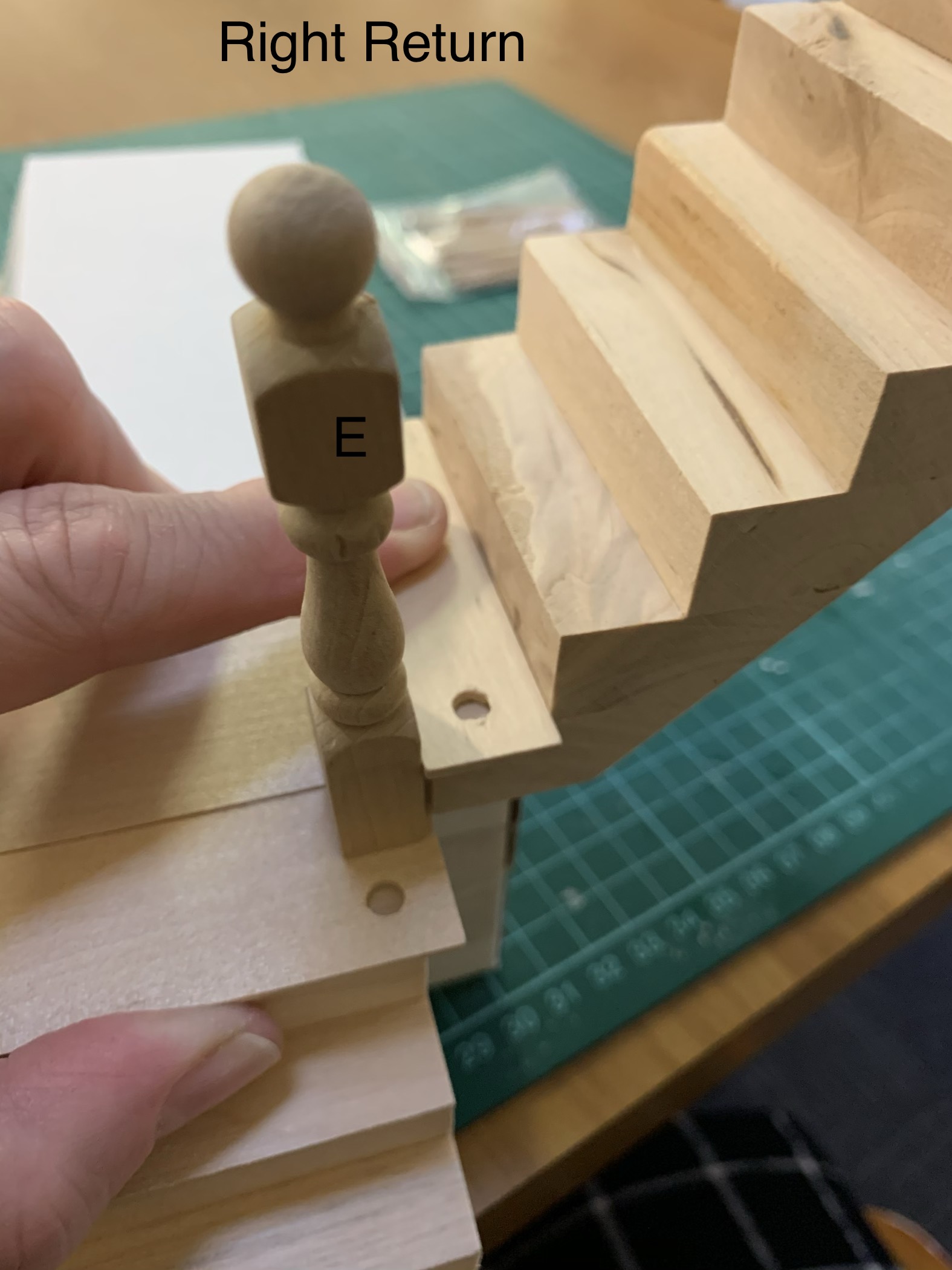
You can also flip everything around so you can do a left hand return too.

So the end result would be a left hand return..
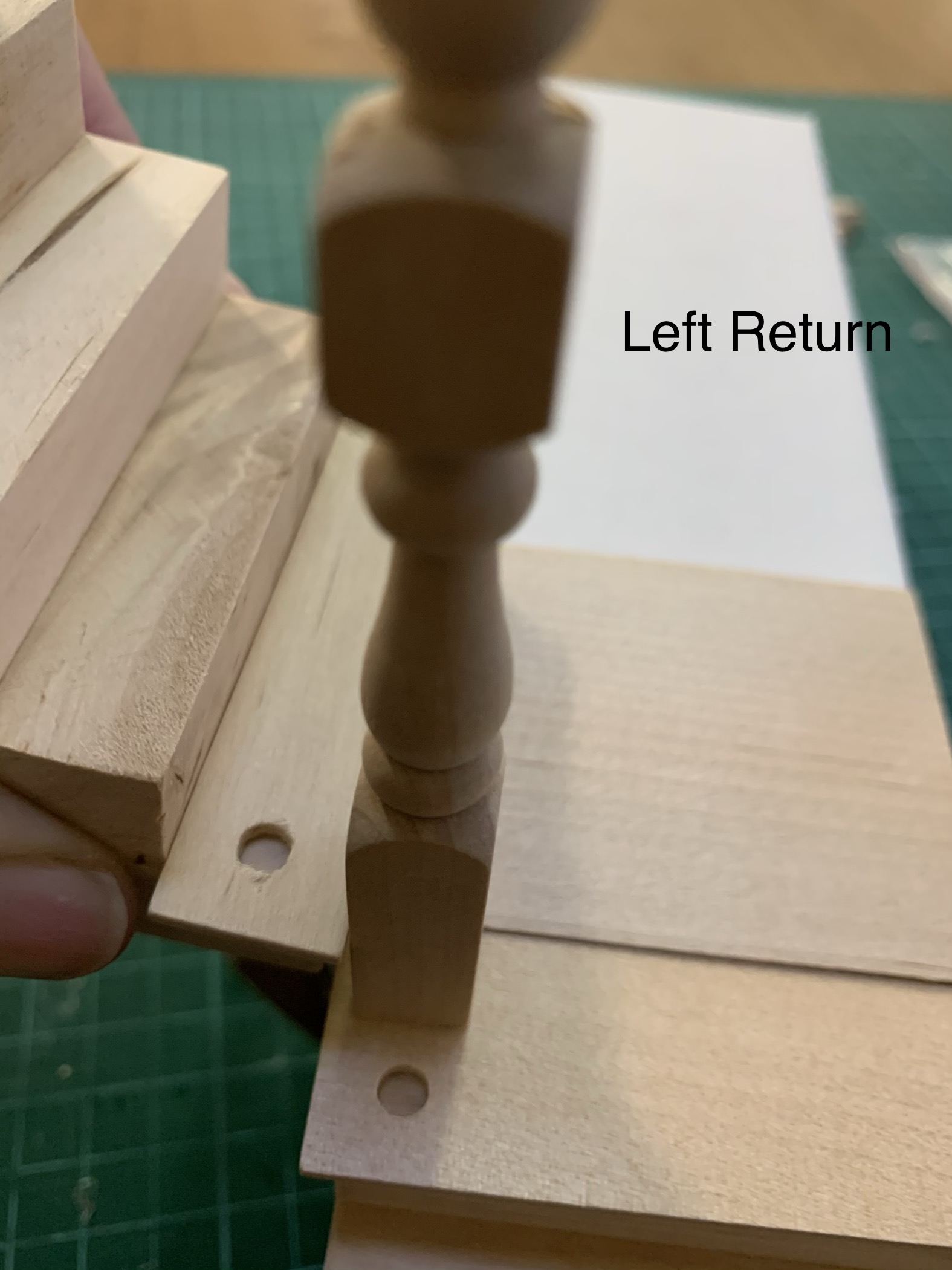
So there you have it. I hope that all the pictures and the short explaination has helped you with your kit. Don't forget to let me know if there is anything else you would like me to help with.
Lighting in your doll house
I have been asked numerous times how to do lighting in the doll house, what to use and if a kit is needed. When I get asked about this in the shop it is relatively easy for me to explain. However when I am asked via email it gets a little tricky and my emails get convoluted and jumbled and even I don't understand what I am trying to say....lol
So I thought I would show you here by way of photos, as they say pictures paint a thousand words....so here goes to me giving you the knowledge of how to do lighting in many thousands of words.
First up you need to plan, what is going to be in the room, do you need it bright or mood lighting or even different lighting areas in the same room. It's all up to you and of course your choice of lights will make your doll house unique
So I will show you the basics and then the world is your oyster, let's begin....
In this photo I have worked out where I want my lights to be and I put those marks onto the floor of the room above. Be careful doing this because it can get very confusing so take your time and remember to mark and label where you want your light to hang. It might be advisable to actually write on the floor which room it is below. Yup the confusion starts...lol
Once I have marked where I want my ceiling light to hang I need to place a groove from that mark/hole to the back of the house, because in this scenerio we are taking all the wires to the back of the dolls house for connection.
Once I have made my hole and drawn a pencil line in the floor above it is time to make the groove to hold the wire. In this picture I used my dremel router to make all my grooves. You can only do it this way if your doll house is still in pieces. I will cover how to do the grooves with the house built further down.
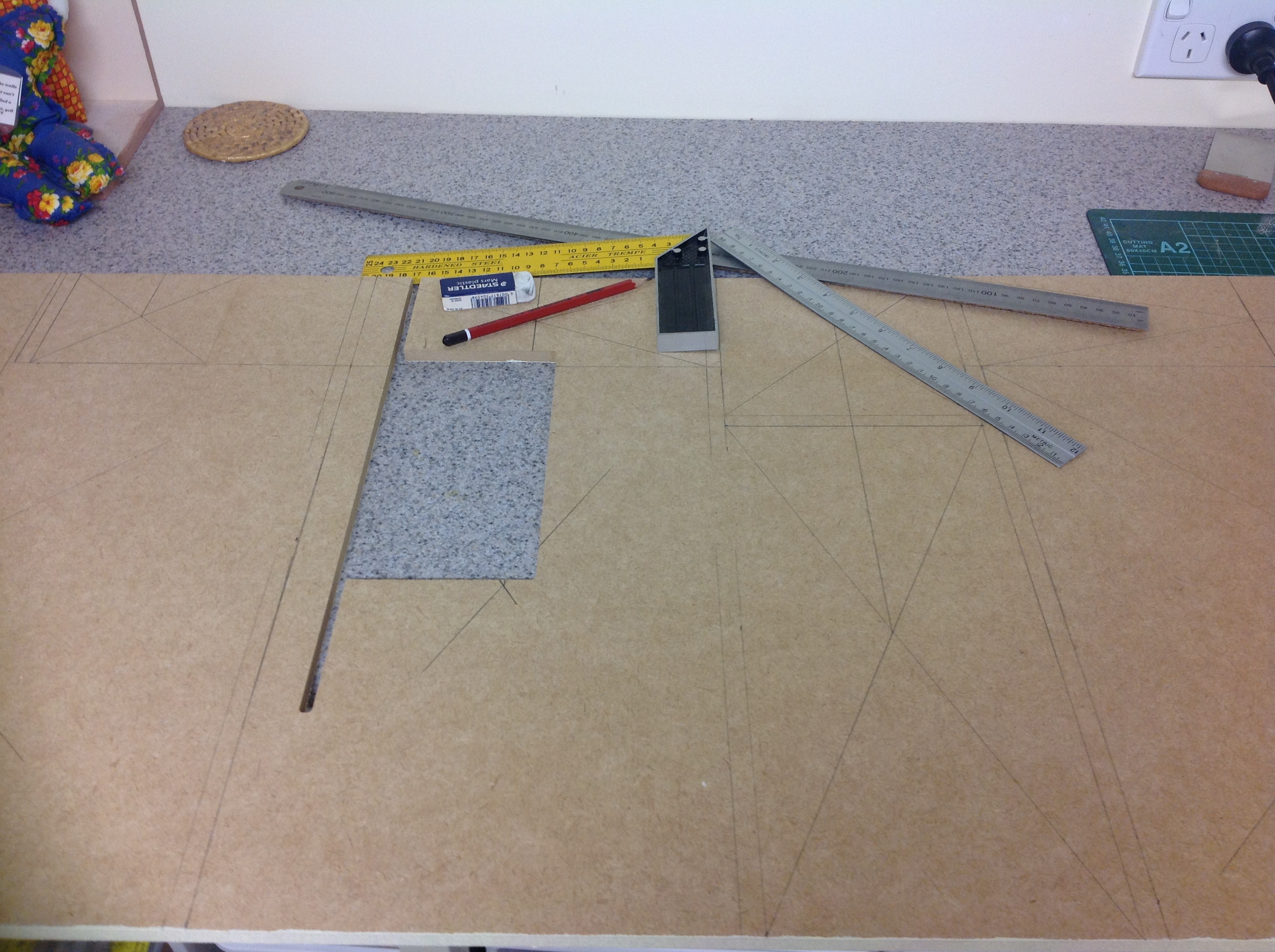
You can see in the above photo that I have drawn a rectangle and then put a cross in to show me where the centre is. The rectangle depicts the room below and the centre is where I will drill a hole and that is the centre of the room where my ceiling light will hang
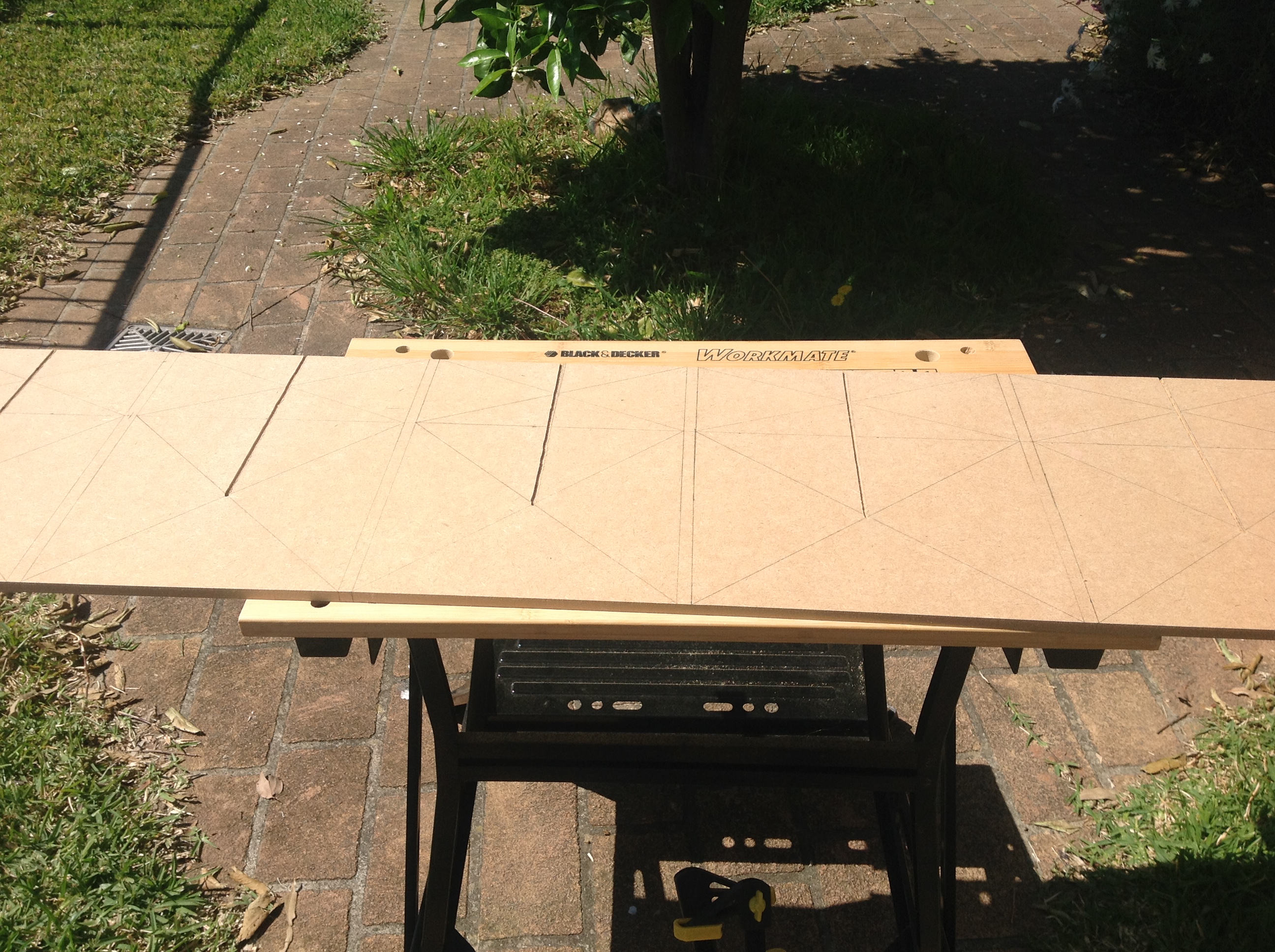
This is showing all my grooves now in place you can see where I have marked the walls and found the spots I want my lights to hang in the room below. Here I am showing you the floor of the room above so the underside of this piece of wood is the ceilings of all the rooms below... are you following me so far?
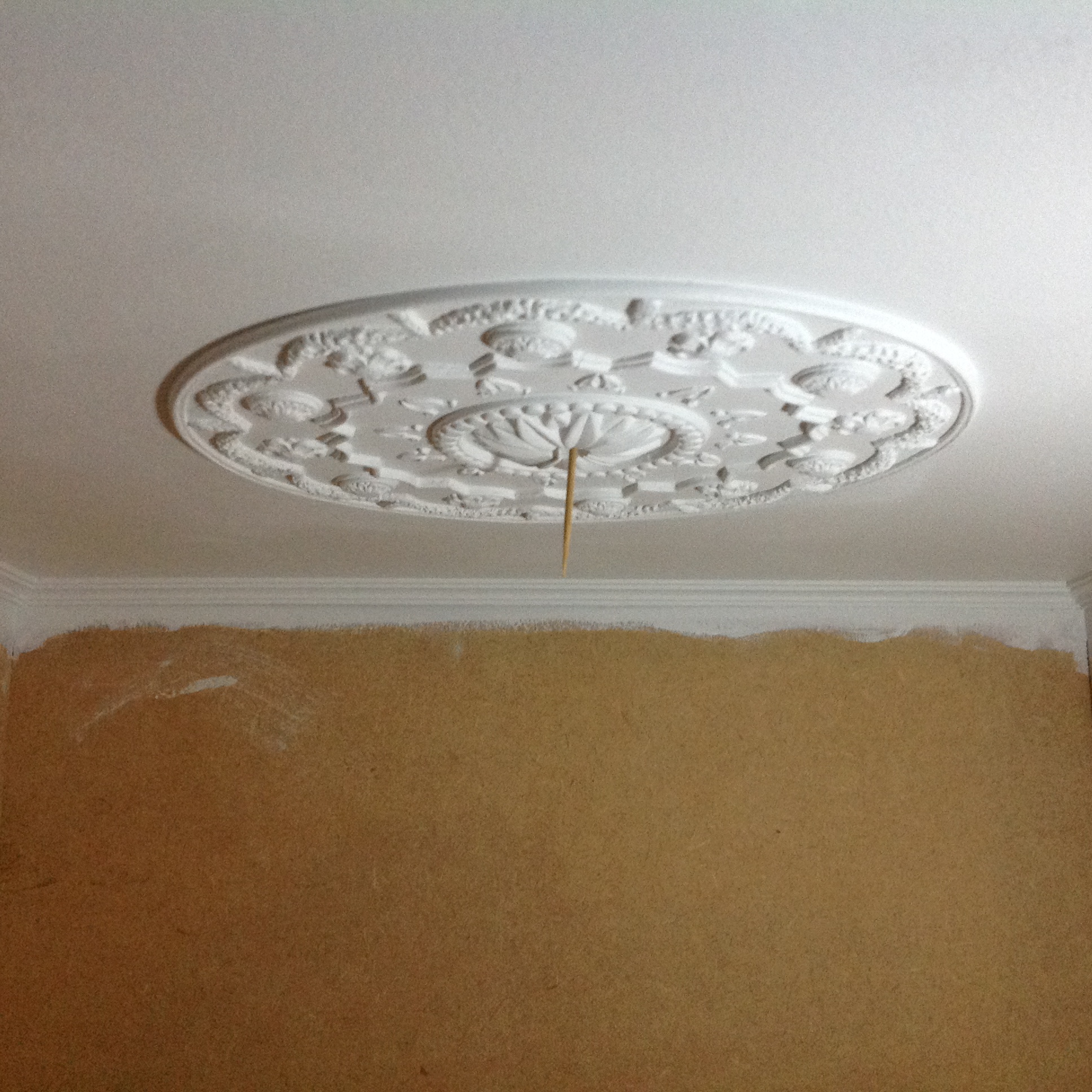
Once you have done all your grooving for your lighting wires the next stage is to get your ceilings ready. I get my ceilings painted and ready to accept my lights, in the photo below you can see that I have added a ceiling rose. To make sure that my holes line up I insert a cocktail stick to help align the holes. ALWAYS keep the cocktail stick moving and free, I have before managed to get glue on this and it stuck in the hole....not a pretty sight!!
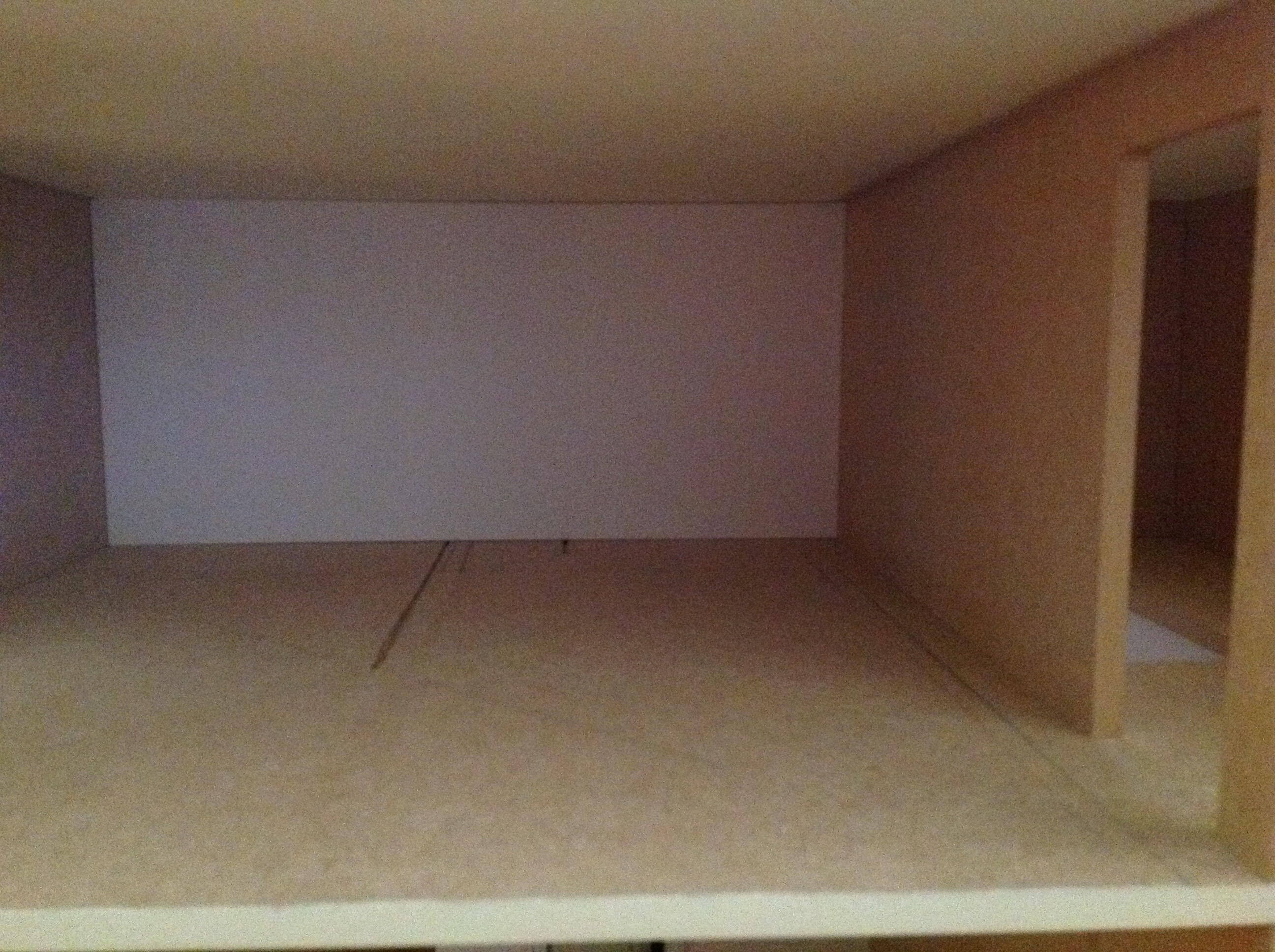
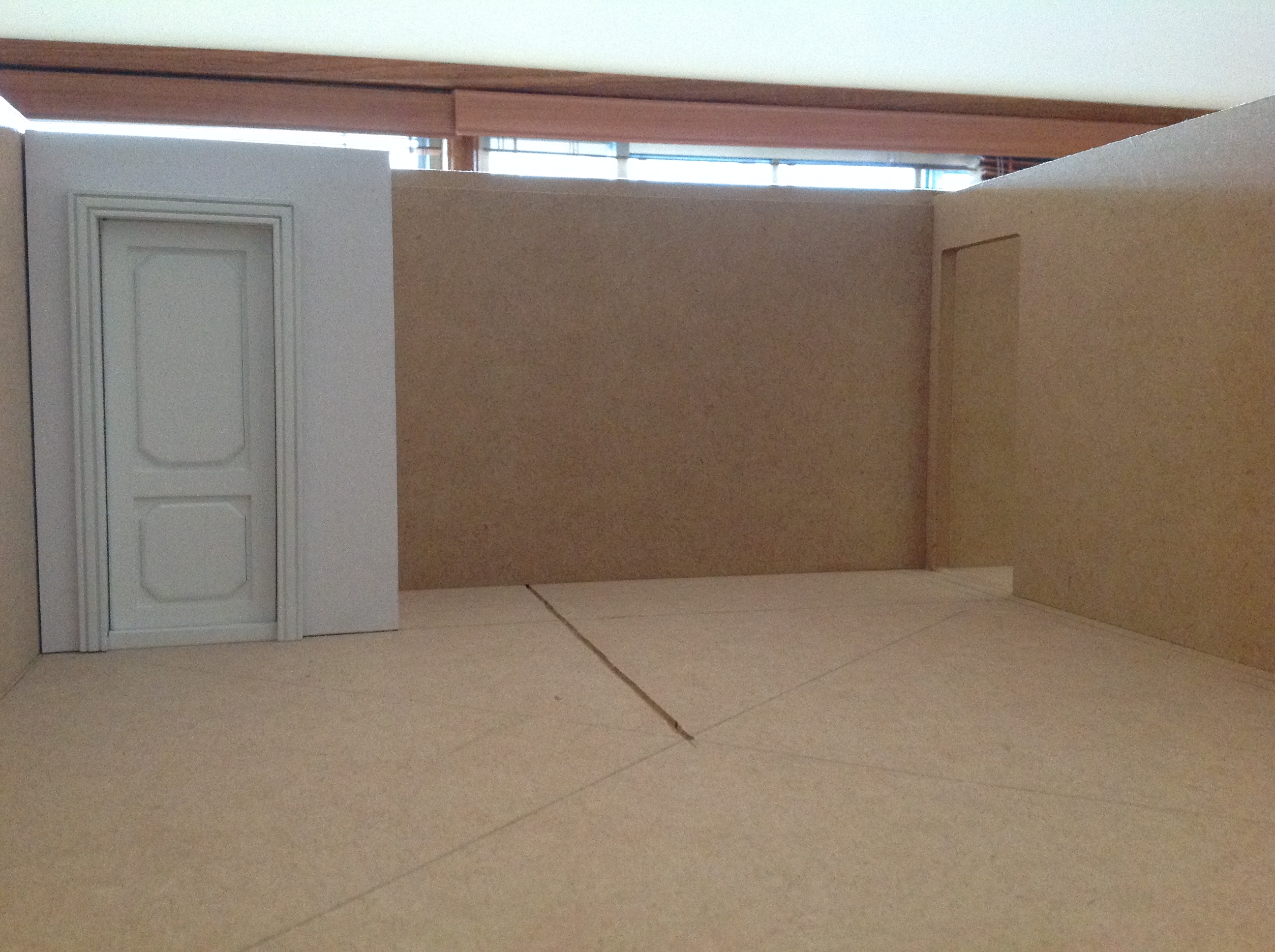
Here are two rooms and you can see the groove in the floor, this will take the lighting wires for the light that hangs in the rooms below. At the end of the groove you will need to drill a small hole through the back of the dolls house so that your wire can go through to the outside. You wont see this because the skirting board and the carpet will hide it. Although I have found if you do it right at the groove then the wire can always be pulled through at anytime if you wish to fix a broken light or you change your mind. The carpet should be removable so that this can be acheived.
Before we begin doing too much we need to check that the light is working. Often the globes become loose during transit and are too loose to make a connection. We need to check this first before we begin. I very gently unscrew the shades this helps when you need to fix something later down the track when your light is glued onto the ceiling. It is easier to unscrew something that has already been unscrewed and if you only gently tighten the shade back then you know it will be easy to remove if needed. It is easier to put a little pressure on it to unscrew when it is in your hands and not hanging from the ceiling. Sometimes the factory may have gotten a little glue in the threads and the initial untighten can be a little stubborn so be gentle. I also unscrew and re screw the globes too, again for ease down the track. Remember when doing this do not grab the globe glass and twist..you will shear the glass away. make sure you hold onto the entire globe thread and all before doing this. (please make sure that you are using a screw in globe, because some of the lights are bi-pin globes and these are inserted with two little pins and so they push in and pull out. Usually when you purchase these lights the bi=pin globes are not in but are sealed in a little bag attached to the wire near the plug - you just have to remember which lights are which if a globe goes down the track)
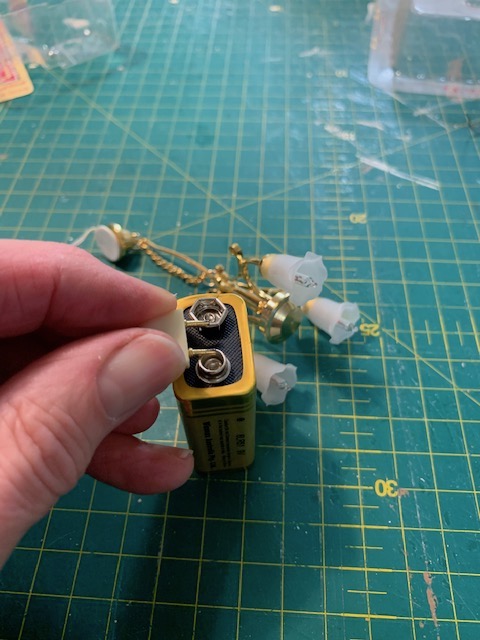
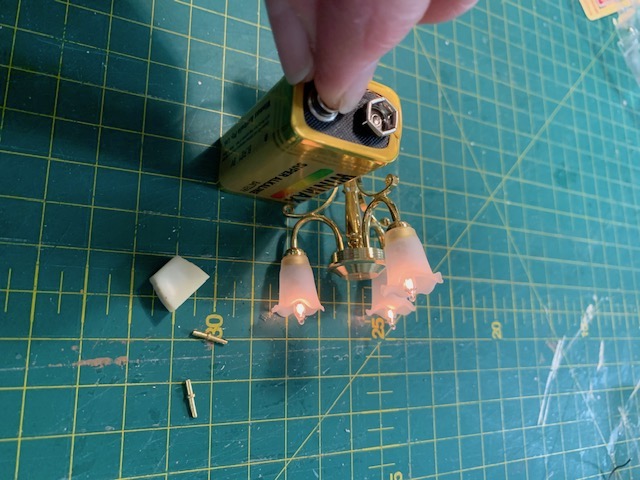
Then take the plug and hold one pin to the top of the connection point on a 9 volt battery and one pin to the other, your light will glow showing that it works well. Remember it will not be fully on as you are only using 9 volts and your lights are 12volts. In my picture my light doesnt work because I forgot to do this before I took the plug off. I am just showing you how it is done.
Once you have picked your light you will need to remove the little plug. Firstly you will mark the little pegs (this helps identify which way you have to put them back in) Once marked then you can pull each one out with a pair of pliers.
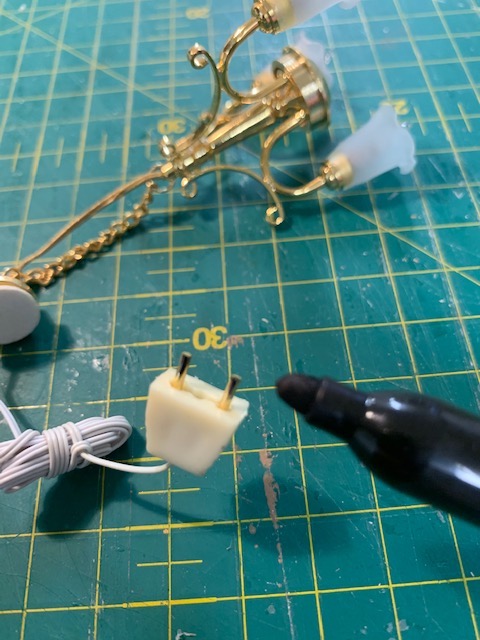
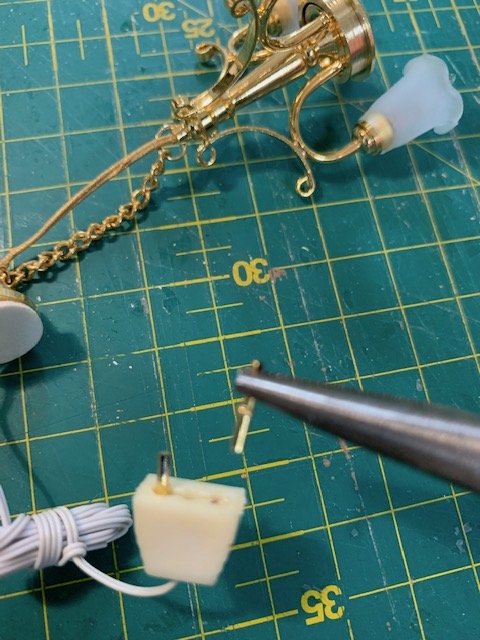
Then you can pop the wires out and pull them through the central hole.
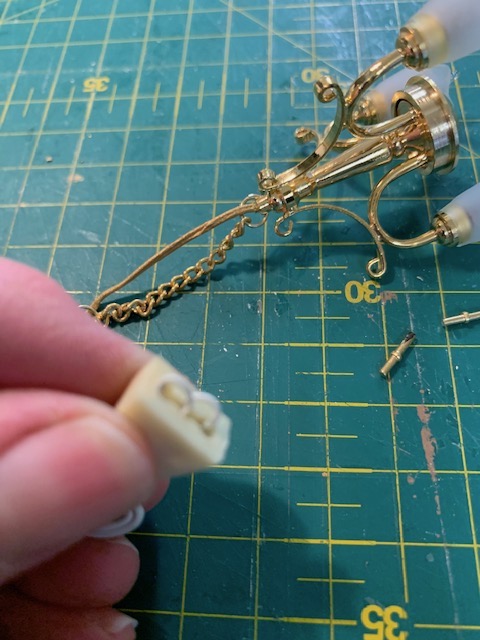
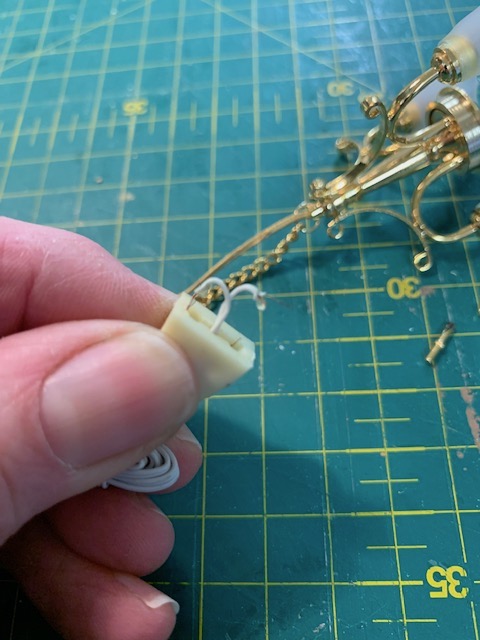
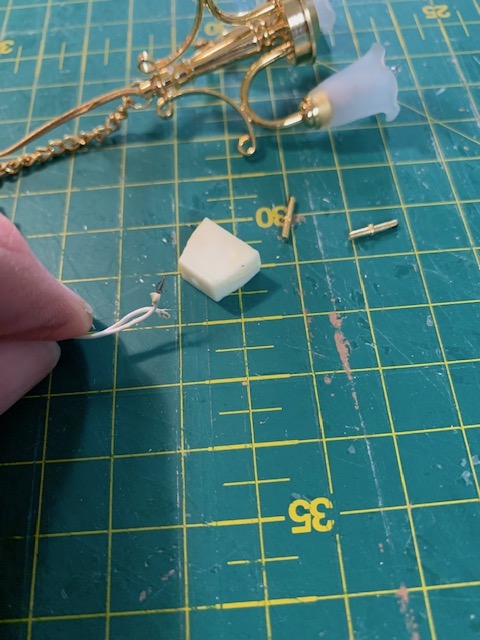
you can now check again to see that your light is still working. I check my light at every stage I do. This way you can easily see at which point the light might not still be working. There's nothing worse than getting your light in and threaded and fixed out the back and it doesnt work!! you have no idea at what point it stopped working of even if it worked in the first place. This way you know straight away that there is a problem and can fix it. Place one bare wire onto the connection point of the 9 volt battery and the other bare wire on to the other point your light should glow.
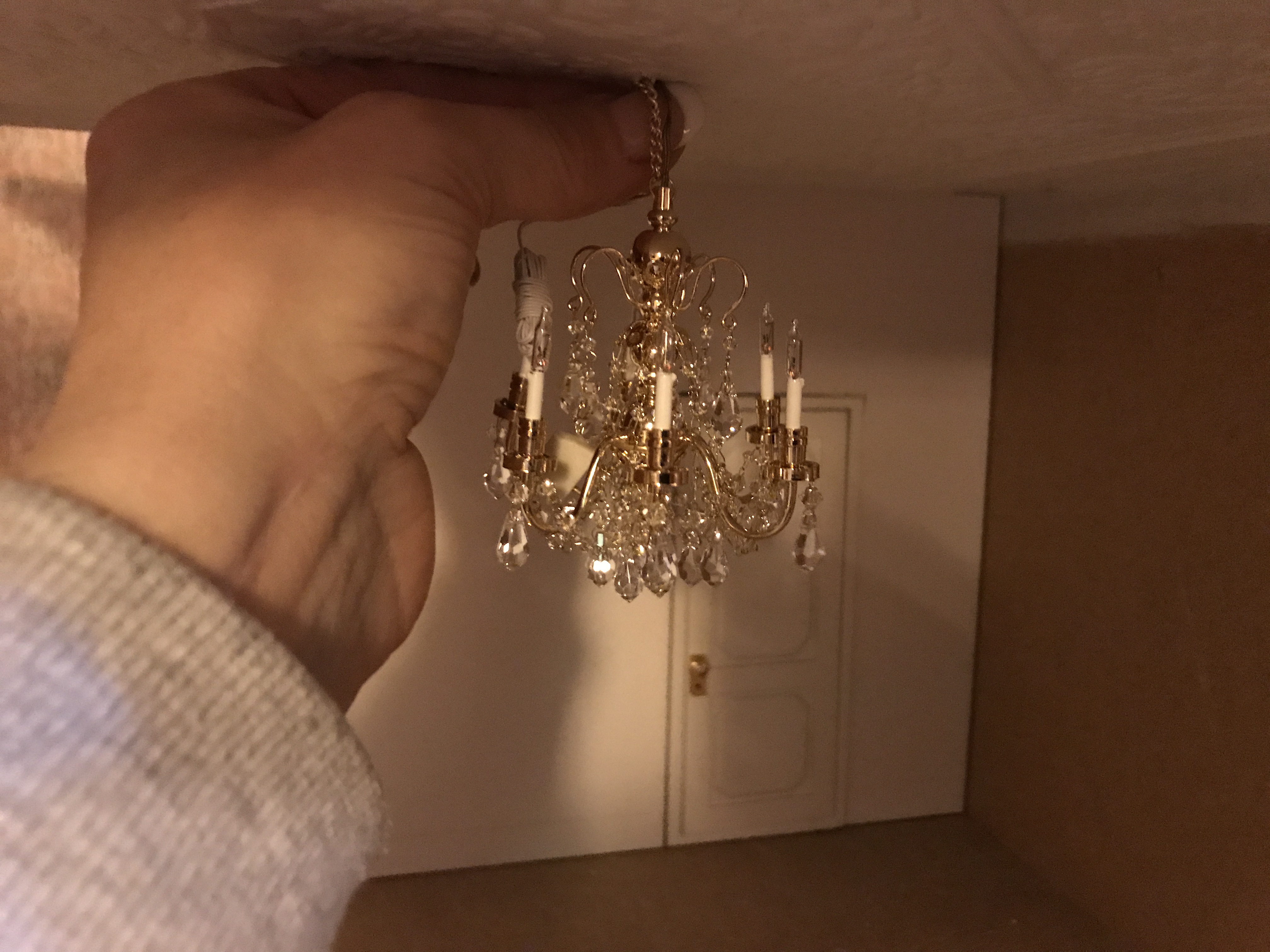
Check that the length of the light is correct too. Some lights come with very long chains and quite honestly look stupid if you leave them unchecked. Its easy to do, open the large ring at the top of the light, pick one of the chain loops that will hold the light at the right height and insert it onto the large ring, close the ring and then cut off the excess chain. Very gently pull the wire through the canopy to make that the same length as the new length chain.
Once the plug has been removed you will thread the wire through the hole up into the room above and then you will lay the wire into the groove. thread the wire through the hole out to the back, then tape over the groove to make sure that your wire doesn't pop out and mark the carpet and being kept in the groove means it will remain safe from wear and catching.
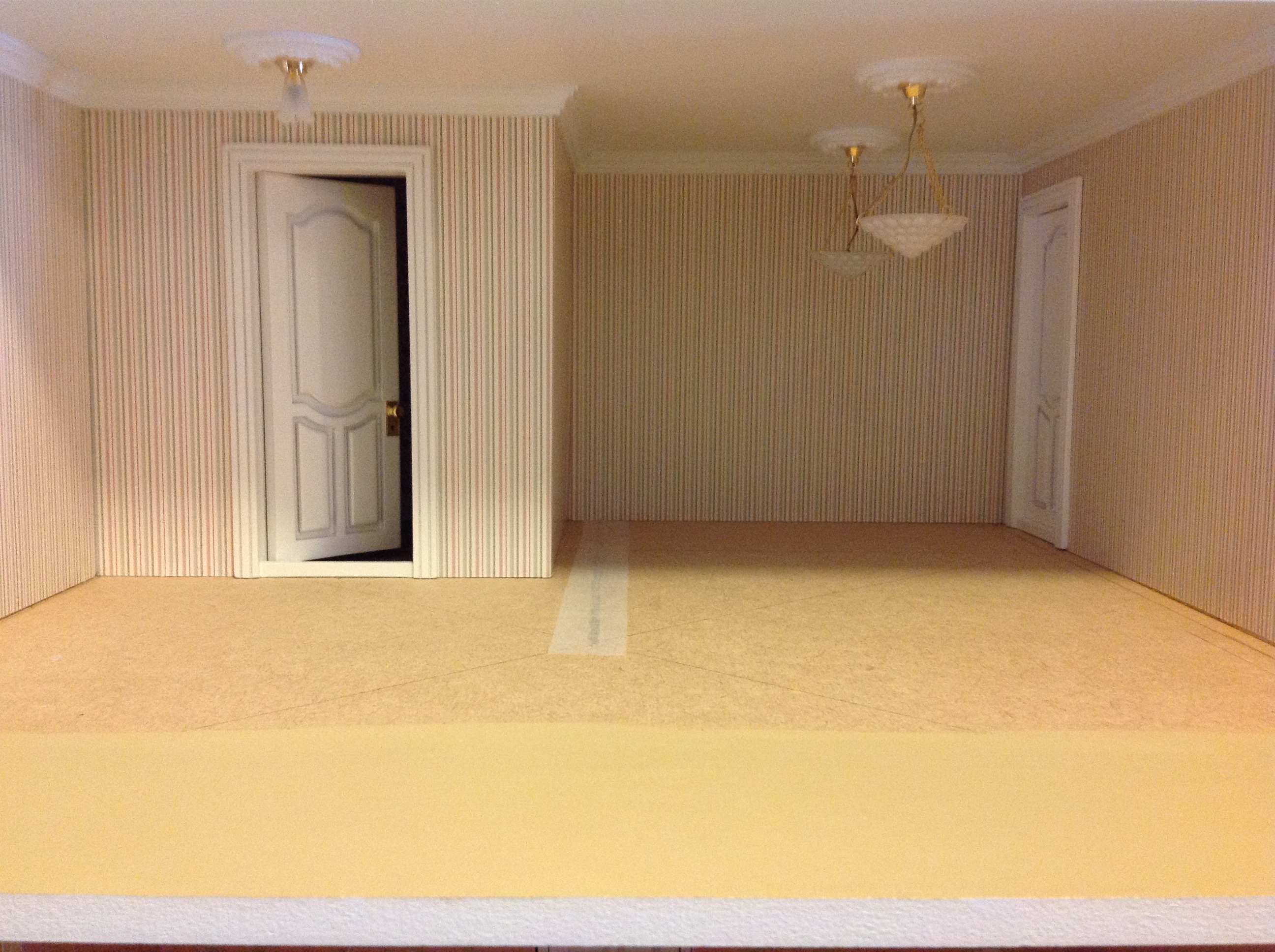
Here you can see my lights hanging and the wires will be hidden in the floor of the room above and you can also see the tape on the floor. This is protecting the wire from the light hanging in the room below.
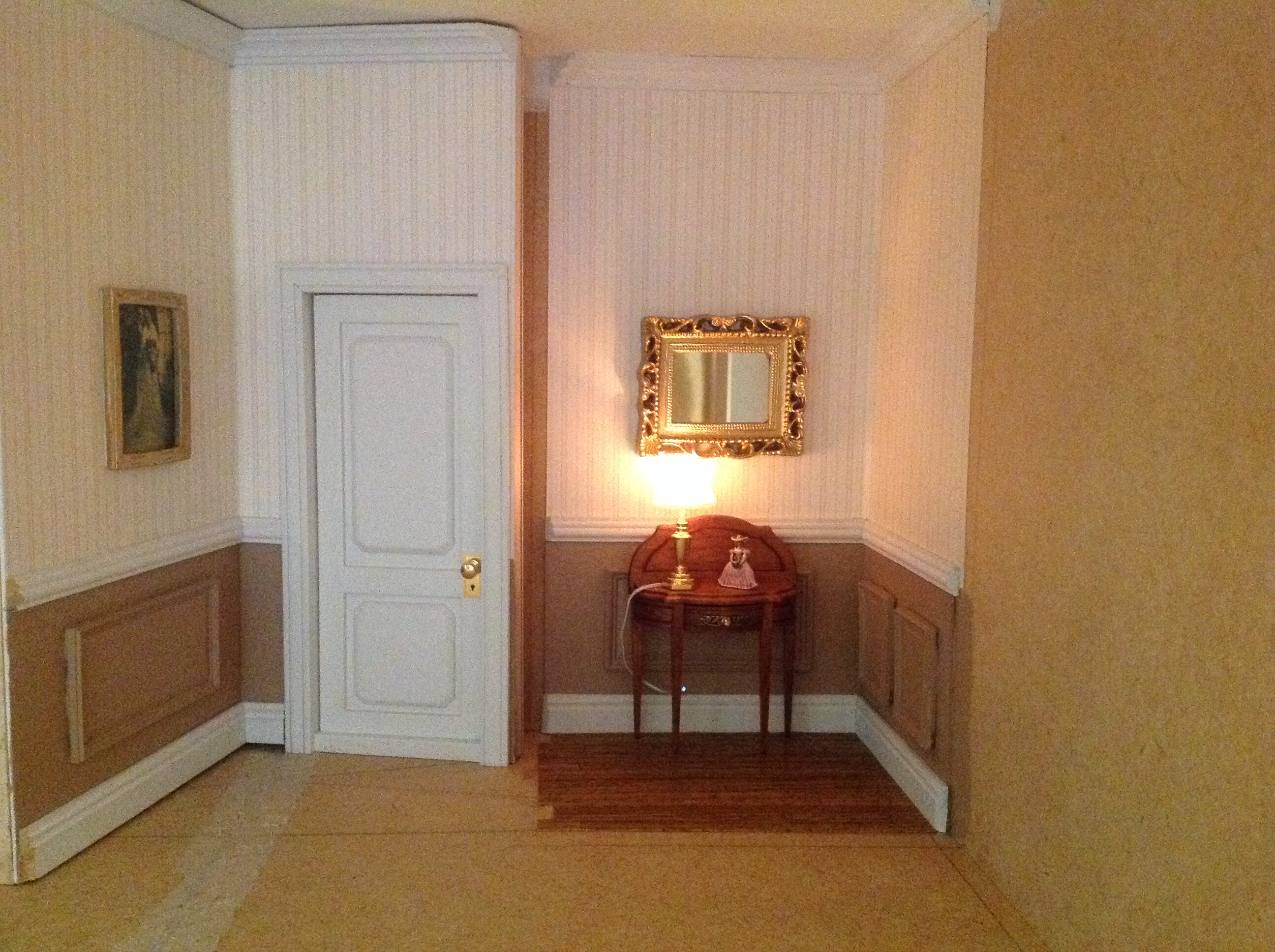
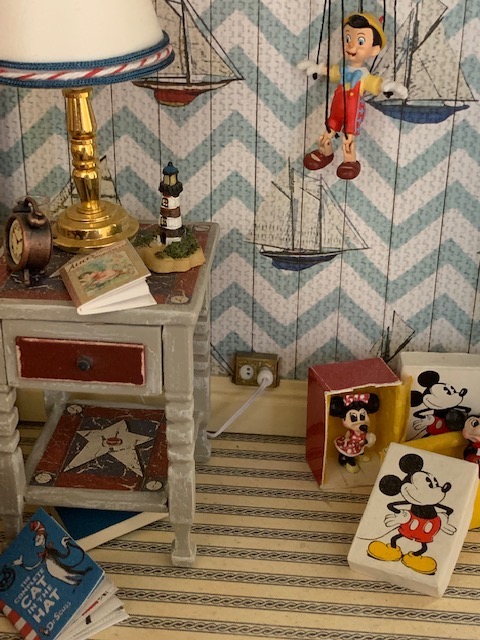
Here I am showing you a lamp. If you look very closely you will see I have drilled a hole in the back wall just above the skirting. If you wish you can make a faux socket with a little square of carboard and a bead. This looks quite cute. You can see I have done this here in this room box.
Lets begin soldering..
On the back of your house you will need to apply the copper tape this can be purchased in half metre lengths. You need to see where your shortest wire is and where/which side you want your transformer. If you need more than one transformer because you have lots of lights I suggest you break the house up into sections. You will find this much easier to do it in sections from left to right rather than top to bottom. You dont want your transformer to be sitting at the top of your house.
The following picture shows a customers house that was so big I had to slice it up into a few sections but each section left the transformer available at the bottom of the house for ease of power connection. On this photo I have also covered all my tape and connections with tape to protect them from being caught or pulled off. However you will see long wires they are the lamps. I leave them loose so that the lamp wire may be gently pulled back through so the lamp can be moved into a different location. Or in reverse excess wire gently pushed back through to the back so that not too much wire is visible in the room.
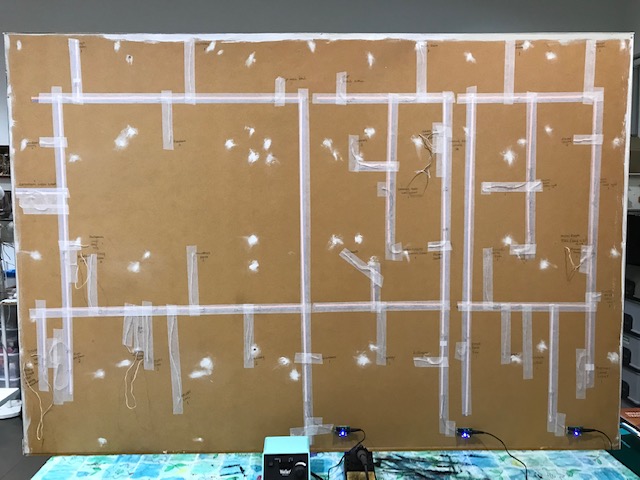
All the tape can be joined with either short lengths of wire joining the gold to gold and the blue to blue so that a box can be made. You can also use brass grommets and hammer these in by putting one strip of tape over the top of the other and putting the brass grommet in to the gold strip so that it also connects to the gold strip below and the blue the same. I will add a photo later when I do one of these again for you to see.
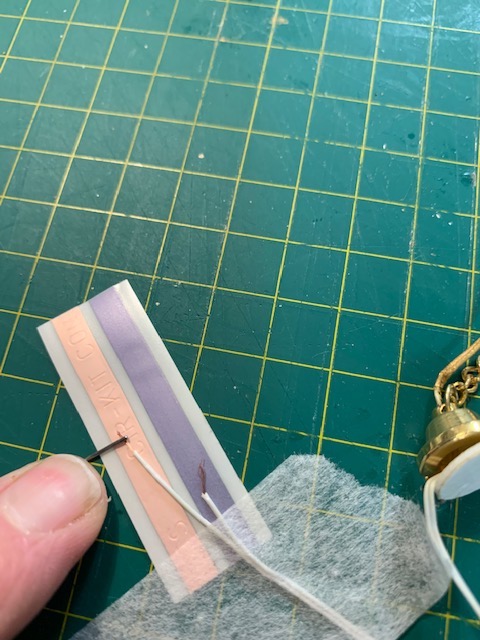
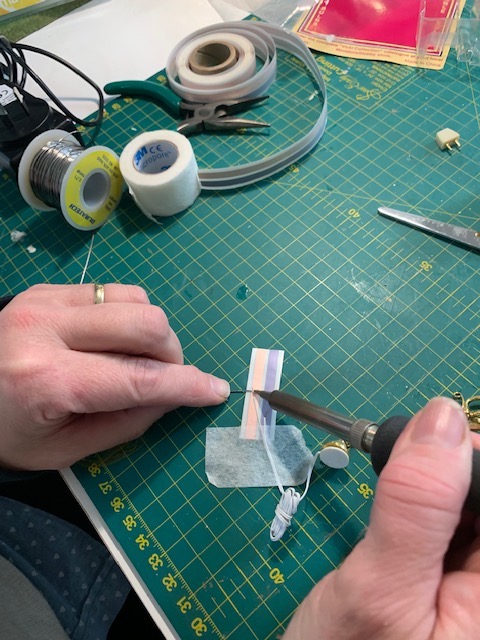
So you need to neaten up the ends of your wires or cutting excess off so that the end result is neat and you dont have lengths of wires everywhere. Then you need to solder one wire onto one side and one wire onto the other side.
Now with doll house lights they are not polarity sensitive ie there is no negative and no positive you can solder which ever side wire onto whichever side of the copper tape. However I do as a matter of habbit work as if it is and keep everything as close to polarity perfect as I can (the lighting wires doesn't matter) BUT some flickering fireplaces and some LED lights are polarity sensitive (make sure if you are using LED lights that they are 12volts) and you can either use a 9 volt battery to find which wire is positive and which wire is negative or if the fire doesn't work then unsolder your wires and turn them around...you have a fifty fifty chance of getting it right....lol but it is easy to put right.
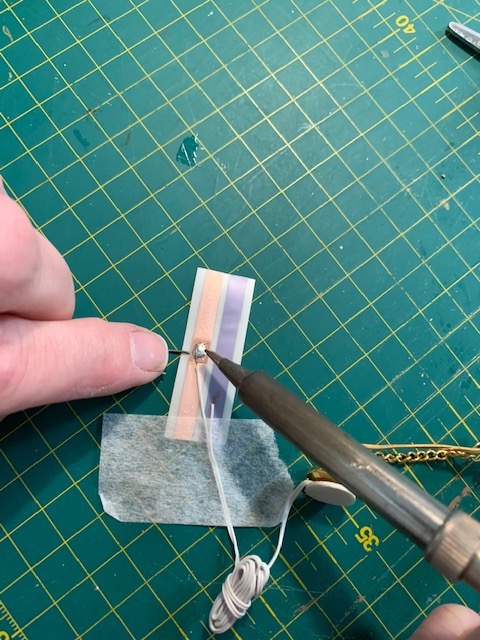
So here are my wires ready to solder. You will see that I have used tape to hold the wires, I call this my third hand...lol
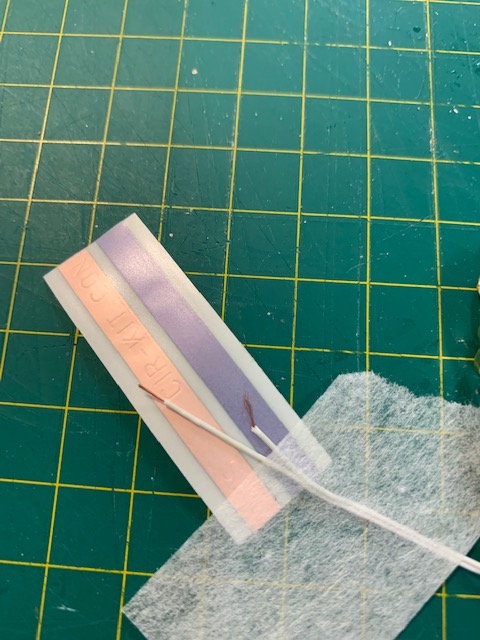
Now to begin soldering. Hold the solder to the wire and then show the solder the tip of the iron, let it heat up and melt the solder. Remove the iron and you are done.
Next you will need a transformer
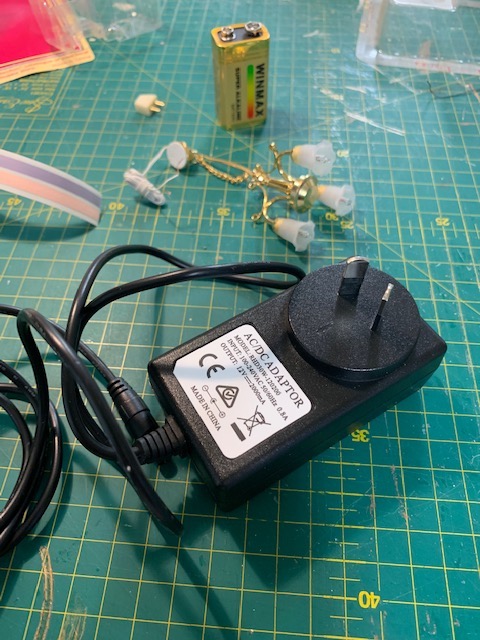
Now to finalise the process and get the power connected to all your hard work. I love to use these connectors.
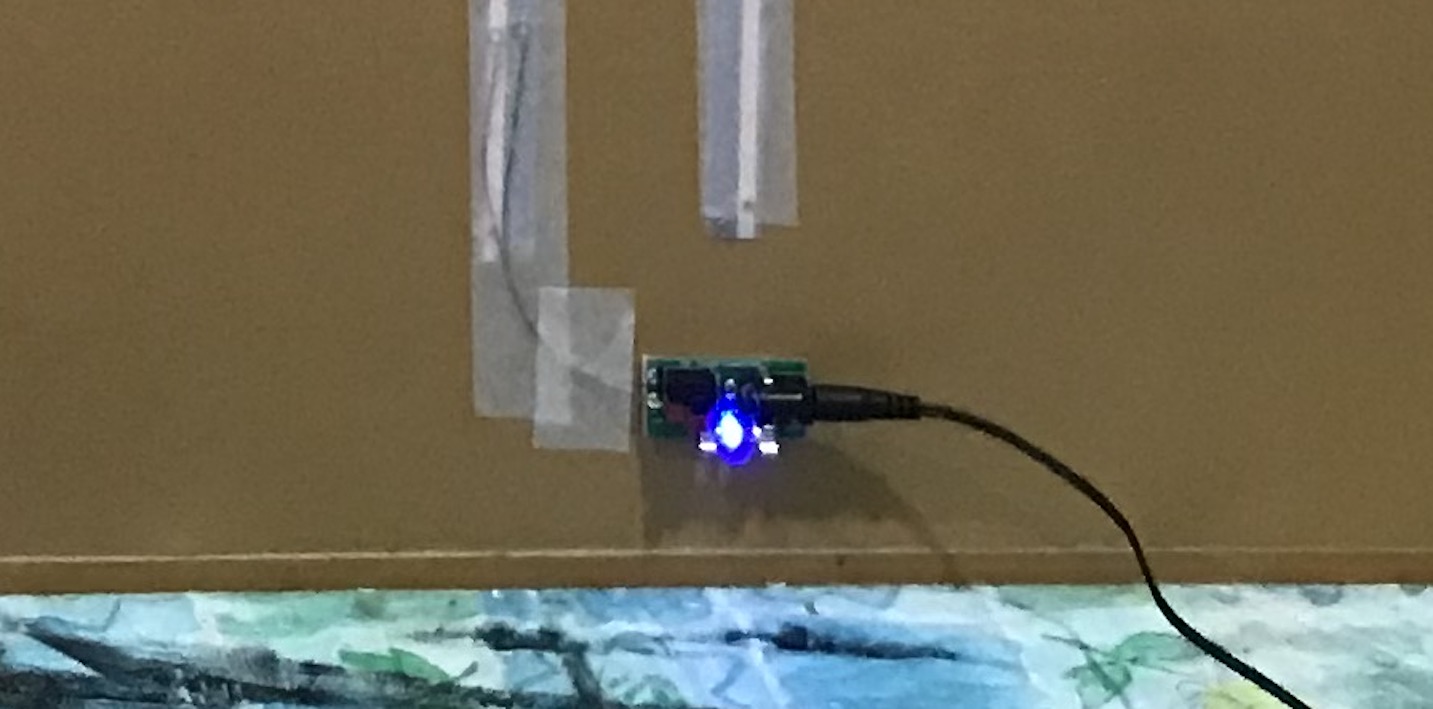
All you need to do is solder two wires to the end of your system and then insert these into the connector by pushing down the levers and inserting the wires. Then plug in your transformer.
If you don't solder and wish to use the junction board then it is all the same process until you get to the soldering. Instead of doing that you just put your plugs back onto the ends of your wires by reversing the process of how the plug was removed. You will love that you remembered to put a black mark on to the pins because now you know which end to push back into the hole along with the exposed bit of wire to trap it in there and make the connection. Sometimes using this system you may have a light that's too far away from your junction board so you will have to use little extentions.
Your junction board has a plug and this then plugs into your transformer.
Hey presto you have LIGHTS... well I certainly hope that you do. Please feel free to contact me if you are having any issues and I will endeavour to help you get to the bottom of your problem.
Comments
No posts found
-
06/09/2020Building the Return Staircase
-
11/09/2019Blythefest - Diorama Competition 2018
-
11/09/2019Blog